DANGOTE’S OIL & GAS CARGO IS MOVING—BUT THE SHIPS AREN’T THERE TO CARRY IT
5 days ago
By Admin
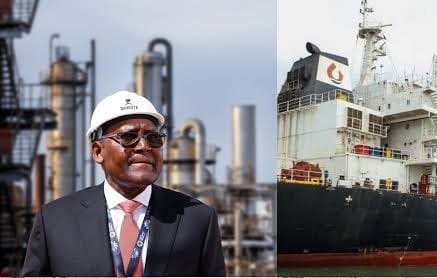
Dangote Group has built Africa’s largest refinery and a sprawling industrial empire, but a glaring bottleneck is threatening to slow its export ambitions: there simply aren’t enough available ships to convey its cargo.
The problem is not hypothetical. At one point, Dangote struggled to secure a vessel to move a 1,000-metric-tonne consignment of cement to Ghana—a short regional route—because no suitable ship could be found. If a conglomerate of Dangote’s scale cannot find a vessel for a small shipment, the capacity gap for moving refined petroleum products and other cargo is severe.
The Scale of the Shipping Challenge
Dangote’s $20 billion refinery is already reshaping seaborne trade. Nigeria’s petroleum-product exports by sea have grown sevenfold since 2023, driven largely by the refinery’s output. The refinery currently handles 75 to 100 ships per month—roughly 900 vessels annually—and that figure is set to double to 1,800 vessel calls per year once capacity expands from 700,000 to 1.4 million barrels per day.
But Dangote’s other businesses compound the demand: fertiliser and cement require 45–50 vessels yearly, with planned expansions adding dozens more for sugar and salt. The group has already handled about 800 vessels at its port and expects around 600 annually at full capacity.
Why the Ships Aren’t Available
· Nigeria’s indigenous fleet lacks the right size and specification. Many Nigerian shipowners do not possess vessels large enough—such as Suezmax or Aframax tankers—to serve Dangote’s needs. As a result, Dangote has chartered Angolan-flagged vessels
· The refinery’s export points have physical constraints. Its three Single Point Moorings require vessels of at least 155 metres in length; smaller ships cannot be fixed, limiting options and increasing turnaround times.
What It Means
Dangote’s shipping squeeze is a warning sign. Without a stronger indigenous fleet and reliable regional maritime capacity, Nigerian exports will remain vulnerable to freight shortages, higher costs, and dependence on foreign vessels. Dangote is securing its own supply chain—but the bigger question is whether Nigeria can build the shipping industry its industrial ambitions demand.